Survivor Kim Buckley: What do I need to do to see my baby grow up?
By ELLYN SANTIAGO
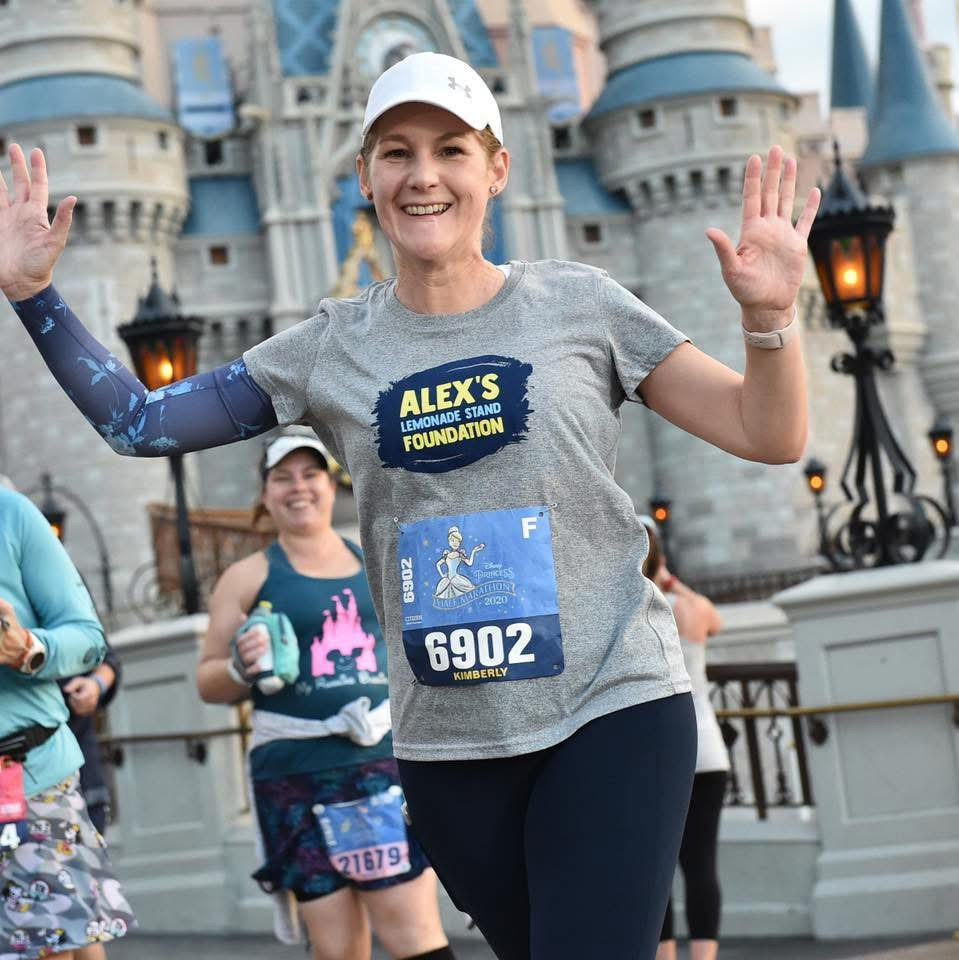
East Lyme High School English teacher Kim Buckley, now 55, was just 31 when she was diagnosed with breast cancer.
The mother of two, Spencer, 25, and Holden, 20, she loves to read, and walk her goldendoodle.
But back then, decades ago, she was a new mom with an active baby boy. She was an educator who’d just recently begun working for Durham schools.
The “weird sore spot” in her right breast didn’t immediately worry her. But, given that her high school sweetheart husband is a physician, she asked him to “feel it for me.”
Tim Buckley was concerned.
“There’s a lump there,” he told his wife, and said it should be looked at.
“I had a 2-year-old. I was busy. I did not think that much of it. But two weeks later, it blew up into a big nodule. Then it shrank back down.”
She called her OB-GYN to reschedule an existing appointment when she was asked if “anything was going on?”
Kim told them she had a lump, that it was small, and she was “pretty sure it was nothing.” Her doctor’s office said plainly: “We consider that an emergency. You need to come in.”
Her doctor urged her to have it removed: “If you were my daughter, I’d say get it out. Don’t sit on it. Get it out. They’ll say to keep an eye on it. Don’t. Get it out.”
A mammogram showed nothing. The radiologist said the ultrasound showed a fibroid. But also a “teeny tiny spot that has a tiny bit of articulated tissue.”
“I don’t like that. Get this removed,” he said.
Though some doctors suggested she could wait, she had the surgery.
“I knew it. I had a feeling it wasn’t nothing.”
With her doctor husband in the waiting room, once she woke up from the operation, the doctor told her: “We found some cancer cells.”
The doctor asked pathology to re-run the tests, to be sure.
They did. It was cancer.
“I knew it. I did. I just had a feeling that it wasn’t nothing.” Her husband told her she’d been in surgery and recovery for a long time. “He knew. He knew, too.”
Kim told her mother, who immediately said, “You’ll be OK.” But later admitted to being “terrified.”
“I remember being afraid. Not knowing what to think,” Kim recalled, but not much else of that day. The days to follow were “brutal;” coping with a care team that she found to be dismissive, casual, and focused on talking about her recurrence chances while noting they’d “forgotten how young you are.”
“What I wanted to know is what do I need to do to see my baby go to high school, to see my baby grow up.
She got a new doctor, a new hospital, Dana-Farber, and a new care team. And while her “angel from heaven” doctor was frank and wanted to ensure she was on board for aggressive treatment, he had his own experience to help guide him: his wife was a breast cancer survivor and was also diagnosed at 31. He got it.
Kim underwent very aggressive treatment, which came with the potential for many serious side effects. She experienced a number of them: “It was brutal.”
”Her Support: Family & Sisters in Survivorship
Her mother, Diane Franco, and her step-dad Carl Franco, who she said was “a rock for me,” as well as her sister Kristie Scanlon, all live very close by. They were always there. They helped care for her and her baby boy. Her husband Tim was there as much as he could be. And, “people I never expected came out of the woodwork” she said, and brought meals, care packages, and left little things at her door. But there were also “other people who just disappeared.”
“That was hard. So I found a community of women online.” The Young Survival Coalition. They became close friends and confidantes.
“One of the dangers of creating a sisterhood of breast cancer women is that you lose a lot of them,” she shared. “I lost about half of that group of women over the years.” As she spoke, her voice was quaking, her pauses were long.
Two women in particular, whom she had grown very close to, Lori and Mylette, both died. One can hear the pain in her voice as she speaks about them. They called themselves Sisters In Survivorship. SIS.
“We’d talk for hours. I became very close to many of them. I most remember not being able to sleep at night. I’d be so afraid at night. I’d go online and talk to these women. We wouldn’t talk about the cancer, we’d talk about everything else, our kids. Mylette was very positive. She was absolutely certain she’d be fine.”
The first in-person gathering they planned was a trip to Washington, D.C. Mylette died two days before. During the phone interview, it was clear Kim is still grieving. “I just couldn’t go. It knocked the wind out of my sails.”
But Kim carried on. She had to. She focused on her son, her family, and got into recovery work and supporting women and survivors.
Then Lori had a recurrence.
“That was the next battle. We lost so many women. So many sisters,” she said. Tragically, Lori, her dearest friend from the sisters’ support group, died. Again, one can hear the pain she feels, even many years later.
Breast cancer at age 31 and surviving it
Kim needs surgery on one of her breasts, has omnipresent pain in her ribs, and worries about leukemia.
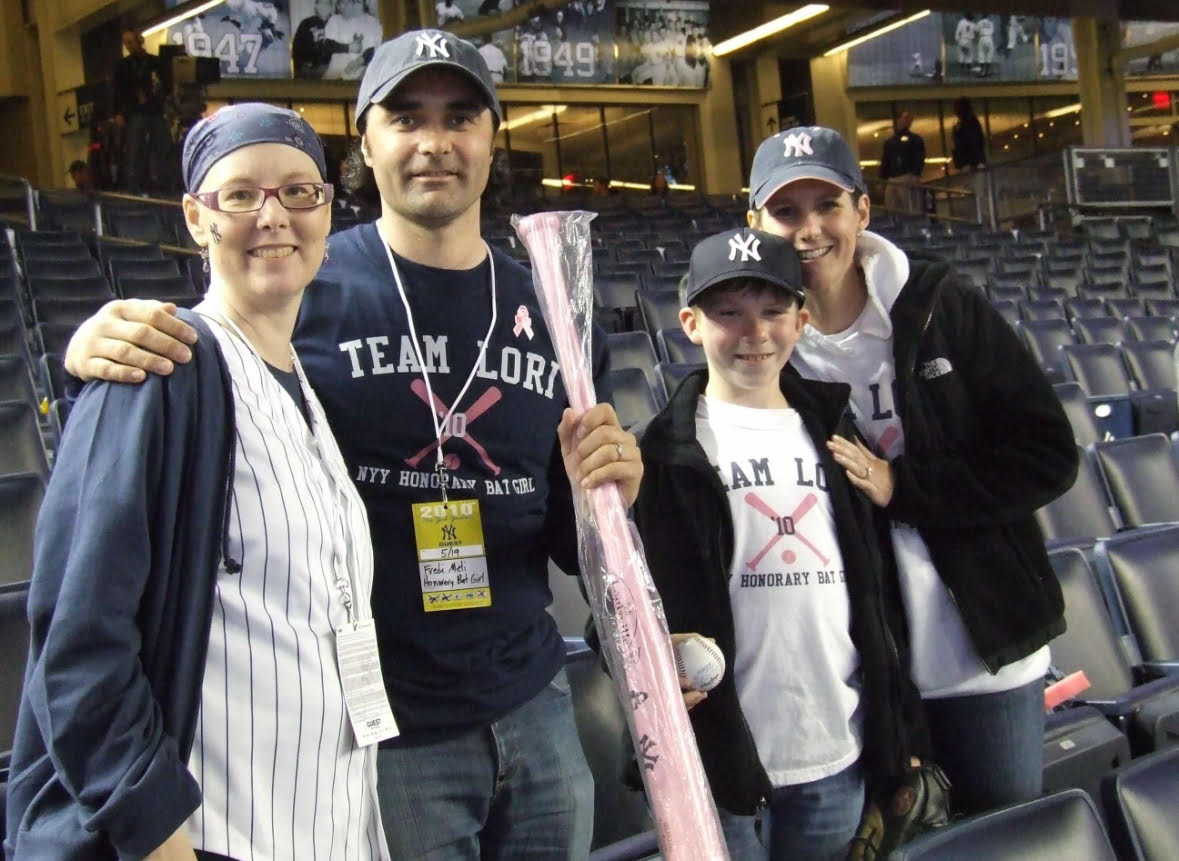
But she says, “I am very grateful. I am very, very lucky. I have had phenomenal care. So many women do not have that.”
“Triple negative 20 years ago, you’re dead. I’m not saying boo-hoo my ribs hurt. I know how lucky I am. I do not have breast cancer in my family. No one in my family has had breast cancer. I just had bad, dumb luck. But still, I’m grateful.”
As a survivor, Kim says the one thing that has really changed for her is taking the best possible care of herself.
“I think I’ve always been someone who stood up for myself. I always valued my core relationships very much. What I value more and tend to more is my health. More than I would have done otherwise. It’s important that I take care of myself. Anything that puts me at risk. There are things that I can control and things I can’t. So I control the things I can.”
Kim has not had a recurrence. She’s in a survivor monitoring program at Memorial Sloan Kettering Hospital.
“At Sloan, I was told that I benefited from excellent medical care. And I did. I survived.”