A Devastating Stage 4 Diagnosis, But Survivor Rebecca Moore Fought The Good Fight And Continues To
A blindsiding lump, a crushing and threatening diagnosis, and years of treatment changed Rebecca Moore’s life.
But for the 54-year-old Oakdale mother of two, every milestone she lives and witnesses is a reminder of why she keeps fighting.
The day she discovered a lump in her left breast was supposed to be just another day in December 2020. Her wedding anniversary was approaching, Christmas was around the corner, and life, despite the uncertainties of a country still gripped by the COVID-19 pandemic, was moving along much as usual. That discovery would change everything.
Just two months overdue for her annual mammogram, and with the pandemic disrupting routines and appointments, she had briefly put off her next screening. And the previous year, both a mammogram and an ultrasound had been clear. But she felt the lump shortly before Christmas. She knew it needed to be checked right away.
On Christmas Eve, her obstetrician examined and immediately referred her for additional imaging. An ultrasound and subsequent biopsy in early January had her doctor deeply concerned.
"She basically said she'd be very surprised if it wasn’t cancer," Rebecca recalled.
Still, she held on to the small possibility that the biopsy would tell a different story.
It didn't.
The diagnosis was HER2-positive breast cancer. But it was the follow-up scans that revealed the full extent of the disease. Wanting answers as quickly as possible, Rebecca went to the hospital's medical records department herself while waiting for her doctor to discuss the results. She requested a copy of the scans and began reading. What she saw was devastating: 3 tumors, with cancer present in her lymph nodes and sternum.
The diagnosis: stage 4, grade 3 breast cancer, an aggressive form of the disease. A year before, imaging showed nothing. She had no family history of breast cancer and no significant health problems: "To go from having nothing to several spots and my lymph nodes, it was just crazy."
The news was particularly difficult to absorb because Rebecca had to navigate much of the early diagnostic process alone. COVID-19 restrictions meant her husband, Tom, could not accompany her to many appointments. Instead, he waited in the car while she went inside.
After one particularly difficult appointment, Rebecca remembers sitting on the hallway floor, trying to process what she had just been told before making her way outside to her husband.
She described being scared and overwhelmed but also fighting back tears.
"I just kept saying, 'I'm going to be OK. I'm going to be OK,'" she said. "And it's not OK."
A pandemic, a cancer diagnosis, an entirely new reality
Although stage 4 breast cancer is generally considered treatable rather than curable, her doctor wanted to pursue treatment with what she described as curative intent, aiming for the strongest possible response. She wanted every available treatment and wanted to begin immediately.
"I wanted whatever chemo, whatever radiation, whatever she wanted," Rebecca said. "I wanted full force, and I wanted it immediately."
The treatment plan began with 16 weeks of chemotherapy, followed by surgery and radiation. Ultimately, Rebecca underwent a double mastectomy.
But the experience of receiving treatment during the pandemic meant that much of it happened without the familiar comfort of having family beside her.
Her husband, Tom, was permitted to accompany her to her first chemotherapy appointment. Her subsequent visits were largely spent alone. She credits the nurses, doctors, and other medical professionals at Smilow with making an extraordinarily difficult experience more manageable.
"They were just so awesome and so understanding," she said. "I could never have asked for a better care team."
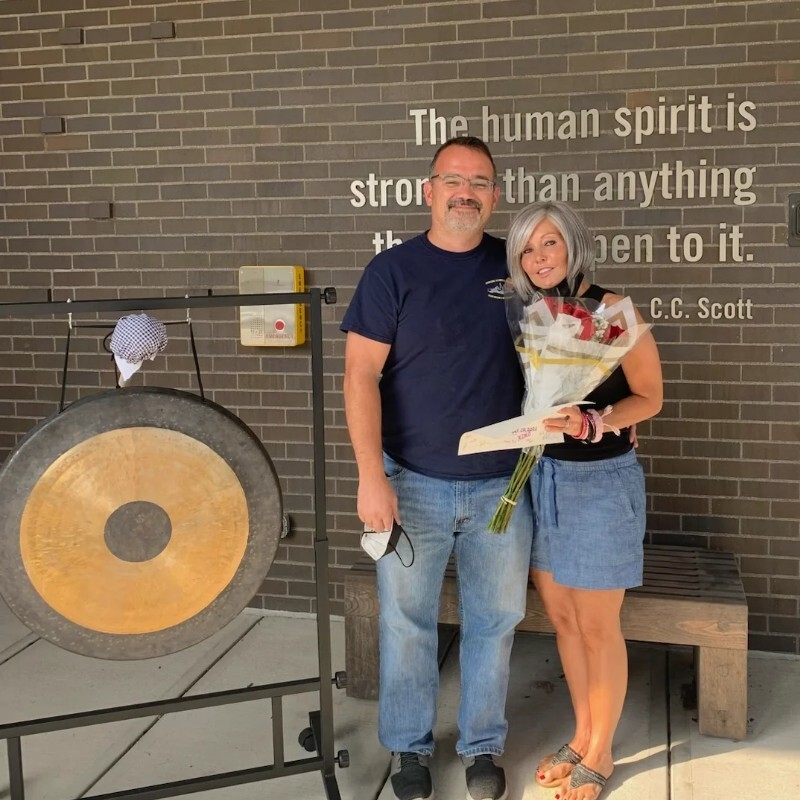
Today, Rebecca is approaching her 100th treatment. She knows many of the people who care for her and says she now looks forward to seeing them.
"I go in there like, 'Oh, I'm coming to see my friends and get my treatment,'" she said.
As Rebecca was undergoing chemotherapy and radiation, her mother-in-law, Ann, came from Pennsylvania to stay with the family and help out. With Tom working and Rebecca dealing with the demands of treatment, her presence was an enormous help.
She also recognized that her husband needed support as the family adjusted to a new and frightening reality. Telling their son was among the most difficult parts.
Karter was still in elementary school when his mother was diagnosed. Rebecca and Tom initially hoped to explain her treatment without discussing cancer, planning to tell him that medication would cause her hair to fall out. A friend, Beth, who had also experienced breast cancer, had given Rebecca several children’s books to help explain the disease. She initially set them aside, thinking they wouldn’t be needed yet. But when Karter went straight to his father that night and asked if his mother had cancer, the books proved invaluable. Together, Rebbeca and Tom read with him and helped him understand what was happening.
And her daughter Brittany, who lives in Pennsylvania, while devastated by her mother’s illness, “stayed strong and was there for me so much.”
Faith also became an important source of comfort. Although Rebecca describes herself as Catholic but not particularly religious before her diagnosis, she began leaning more heavily on prayer during treatment. A close friend encouraged her to turn to God and say the rosary. She took that advice to heart. It became part of her routine, offering a moment of peace amid the uncertainty.
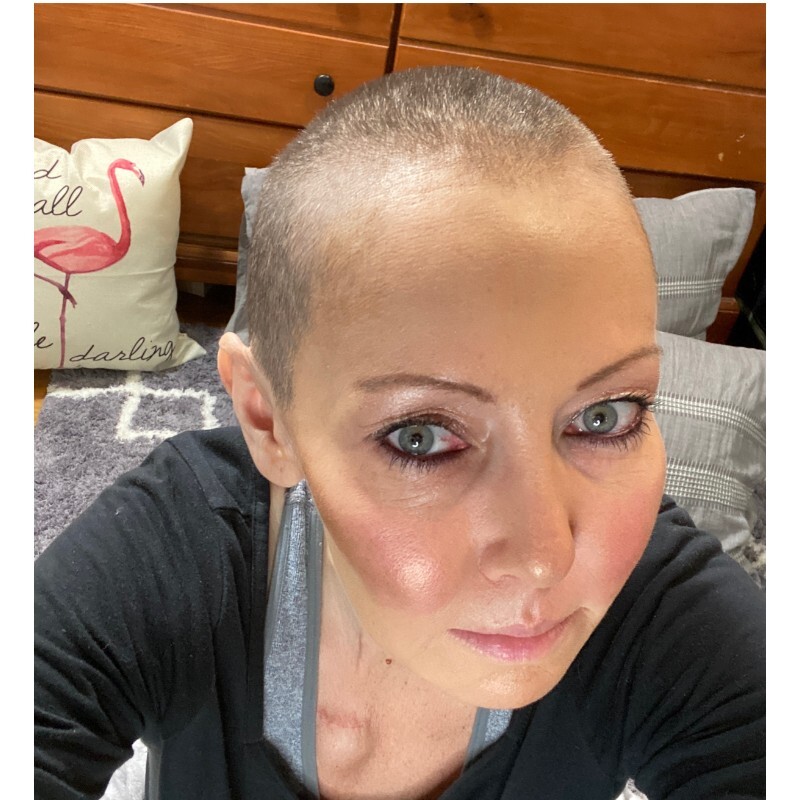
Another deeply personal part of Rebecca’s cancer journey was losing her hair. Known for her beautiful dark brown hair with red accents, she had long been affectionately called “Becky with the good hair.” Knowing chemotherapy would take it away was heartbreaking. When the time came, she chose to take control, arranging a private head-shaving appointment with her hairdresser Kyla, accompanied by Tom. Despite the emotional moment, Rebbeca faced it with determination and humor. She later found beautiful wigs, including a silver one that let her experiment with a color she had always wanted, reclaiming a little joy and individuality.
The chemotherapy worked remarkably well. Follow-up PET scans and an MRI showed a significant reduction in the cancer. Her oncologist could barely feel the original tumor in her chest.
Today, Rebbeca is in a good place medically. Her most recent scans showed no evidence of active disease, commonly referred to as NEAD. But she is careful about how that milestone is described.
For someone diagnosed with stage 4 breast cancer, no evidence of active disease does not mean the cancer is cured. Rebbeca must continue treatment to keep cancer cells under control, and she understands that stopping treatment could change her outlook.
It is a distinction she wishes more people understood.
"I'm not cured, but I'm at a very good spot," she explained.
The ongoing treatment is a reminder that cancer remains part of her life, even when scans bring encouraging news.
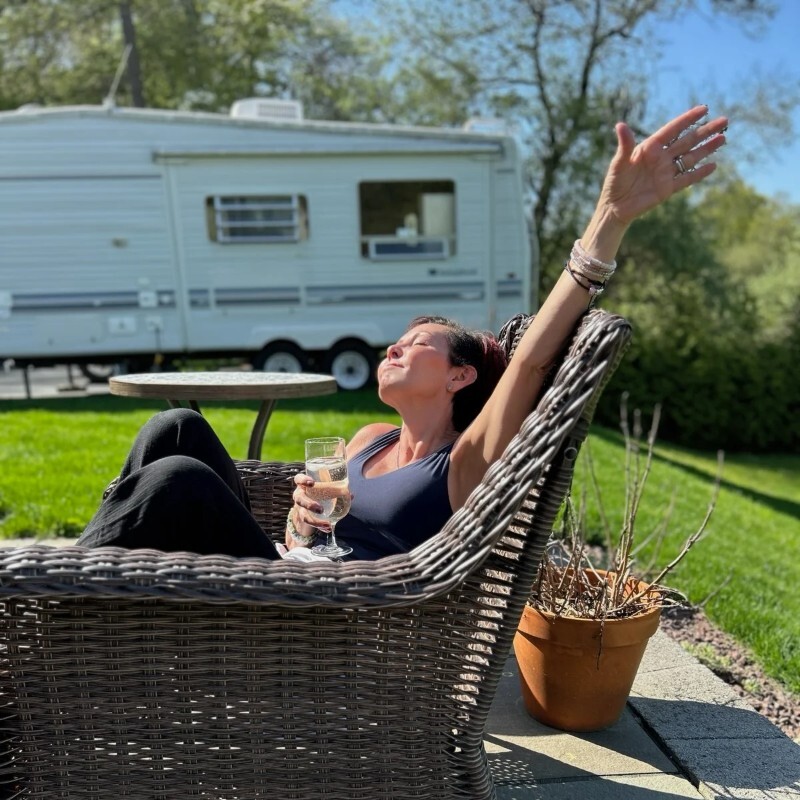
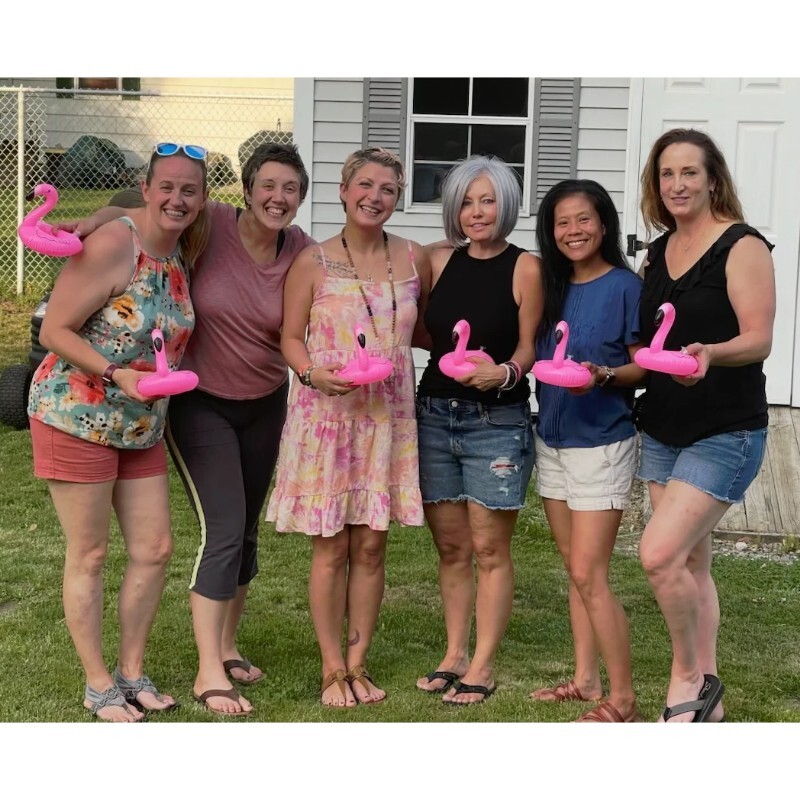
Her life is different now. She enjoys spending time with friends, going out to dinner, shopping with a close friend, having girls' nights. She treasures ordinary moments that might once have seemed unremarkable.
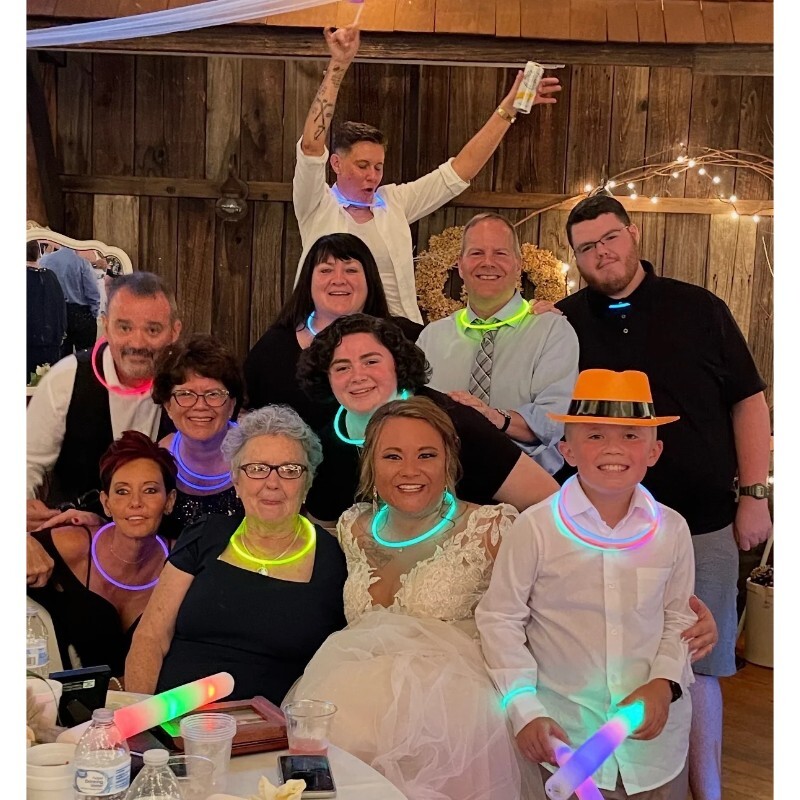
And she has already witnessed one of the milestones she once feared she might never see: Brittany's wedding in 2022. For Becky, being there to watch her daughter get married was enormously meaningful. Now, she looks ahead to Karter's high school graduation and, someday, his wedding.
When she was first diagnosed, those milestones seemed impossibly far away.
"I really felt hopeless," she said. "I didn't feel like I was going to be able to be a part of all of this."
Her journey is not about declaring cancer defeated. It is about continuing to live, making room for hope, and recognizing the extraordinary value of the time she has.